


Looking for the highlights? We’ve created a concise summary that highlights the article’s most important takeaways in a quick, easy-to-digest format. Download today
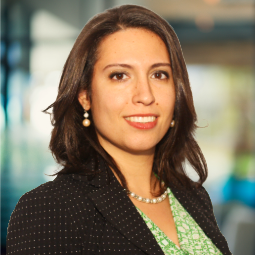
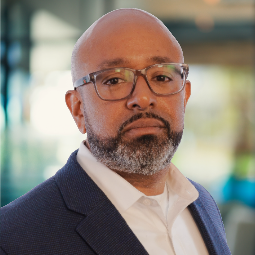
Authors: Tandis Nili & Haendel Conil
Why a U.S. captive can complement, rather than displace, a mature European risk-financing platform, and why that decision should follow risk intelligence rather than precede it.
Core point:
A mature European captive may remain the right home for U.S. risks, particularly where diversification and a single capital structure create value. But where U.S. exposures become sufficiently large, distinct or strategically important, a U.S. captive can contain selected volatility and create a scalable local platform without dismantling the European captive’s role. That conclusion should follow the evidence: growing U.S. exposure, deeper U.S. risk intelligence, stronger underwriting and claims governance, and only then an evaluation of risk-financing structure.
Why Captives Matter Today
Many European risk managers first encounter captives through the language of premium savings. That is understandable, but incomplete. A captive is most powerful when it changes the company’s relationship with risk itself.
A well-designed captive can formalize risk already retained through deductibles, self-insured retentions, exclusions, uninsured exposures and collateralized arrangements. It can help preserve underwriting profit where experience is favorable, accumulate surplus, improve claims visibility, tailor coverage and align risk, finance, treasury, legal and operations. Those benefits are not automatic. They depend on credible data, appropriate capitalization, actuarial discipline, compliance and strong governance.
For a first-time buyer, the captive is not the destination. It is the operating system. Readers of our earlier articles, Legal System Abuse and the Illusion of Predictability and Rethinking U.S. Liability: Why Tort Reform Matters More Than You Think1, will recognize the recurring theme: many consequential U.S. insurance issues are also questions of governance, capital allocation and risk ownership.
Why the U.S. Changes the Discussion
Throughout this series, we have examined characteristics of the U.S. liability environment that frequently challenge European assumptions. Our earlier articles considered how attorney advertising, third-party litigation funding, venue dynamics, procedural leverage, evidentiary rules and jury-driven litigation can influence claim severity and predictability.
The challenge is not simply that U.S. losses can become large. It is that they may develop through mechanisms unfamiliar to European headquarters, with claim value influenced by litigation strategy, funding structures, venue and the timing of key decisions. A single event can become a dispute about corporate conduct, documentation, prior knowledge, contractual responsibility, vendor management and settlement posture.
A captive does not change those realities. It can change how the organization finances and governs them. That creates a legitimate reason to ask whether selected U.S. exposures should be contained within a vehicle designed around their program mechanics and development patterns.
Exhibit 1: The captive lens changes the question
| Traditional question | More useful captive question | Why it matters |
|---|---|---|
| How much premium can we save? | How much volatility are we already retaining? | Savings alone can obscure risk retained through deductibles, SIRs, exclusion and collateral. |
| Europe or the United States? | Which risks benefit from which structure? | Domicile should follow portfolio economics, program mechanics and governance objectives. |
| Do we need another captive | Does selected U.S. risk justify a separate platform? | A second vehicle should solve an identifiable financing or governance need. |
Understanding the Exposure Before Choosing the Structure
For many European headquarters, the first question is not whether the group needs a U.S. captive. It is whether the group truly understands its U.S. exposures. U.S. growth rarely arrives as a risk-financing question. It arrives as revenue, headcount, contracts, vendors and distribution, and only later as litigation and claims volatility. The first gap is usually one of information, expertise and visibility, not structure.
Closing that gap requires people who see U.S. losses every day: claims professionals, actuaries, defense counsel, captive specialists and risk-financing advisors with real U.S. market experience. Their value lies in interpretation rather than data. They can explain how losses develop, how reserves behave over time, how venue and litigation trends drive severity, and how timing shapes settlement outcomes.
Better information improves the two disciplines that shape results long before capital structure does: underwriting and claims governance. Understanding loss drivers supports more disciplined pricing and reserving. Clear escalation thresholds, active claims oversight and large-loss protocols shorten the time between an incident and an informed decision. Only then can the financing question be answered on evidence: whether a U.S. captive, a separate U.S. portfolio within the existing captive, or an integrated European structure best fits the scale, volatility and strategic importance of the U.S. business.
Approached this way, a U.S. captive becomes one possible result of a broader risk-maturity process, rather than the assumed next step once U.S. exposures grow. That distinction matters in European headquarters, where a second regulated vehicle has to be justified, and where the quality of the decision is judged by the evidence behind it.
Exhibit 2: From exposure to evidence, the sequence that precedes the captive decision
| Stage | What is requires | Question it answers |
|---|---|---|
| 1. Growing U.S. exposure | Visibility into operations, contracts, liability exposure and claims volatility as the U.S. footprint expands | Has the risk profile changed faster than our understanding of it? |
| 2. U.S. risk intelligence | Claims professionals, actuaries, defense counsel, captive specialists and risk-financing expertise with deep U.S. market knowledge | Do we have the local expertise to interpret how these risks actually develop? |
| 3. Underwriting and claims governance | Loss-driver analysis, litigation-trend awareness, reserving discipline, escalation thresholds and large-loss oversight | Are we managing severity, or only recording it? |
| 4. Risk-financing evaluation | Assessment of scale, volatility, correlation and strategic importance against each structure option | U.S. captive, segregated U.S. portfolio or integrated European captive: which one fits the evidence? |
Preserving the European Captive While Testing the U.S. Case
A mature European captive may already underwrite U.S. risks successfully while diversifying across lines, geographies and exposure profiles. Where those losses are not highly correlated, combining them can reduce volatility, support capital efficiency and strengthen the economics of the overall portfolio. Accumulated surplus, established governance, and experienced service providers are also meaningful advantages.
Those benefits should not be dismissed casually. A separate U.S. captive brings another board, regulatory relationship, audit, actuarial process, compliance framework and operating cost. It may require additional capital and narrow diversification. Nor does strong U.S. claims governance always require U.S. domicile; local protocols, expertise, escalation thresholds and reporting can be built around a European captive.
But that is a consideration, not a veto. A U.S. captive can be strategically advantageous when the U.S. portfolio has sufficient scale, when selected risks are operationally distinct, when fronting or collateral dynamics warrant a local solution, or when the group wants a platform capable of adding lines and supporting future growth. In that setting, “containment” means deliberate segmentation of selected U.S. volatility, not rejection of the European captive.
A Complementary Architecture, Not a Vote Against Europe
A recent example makes the distinction clear. International SOS established a Vermont captive in January 2026 to complement its long-standing Singapore captive. According to Captive Review, the new vehicle initially underwrites medical stop-loss and selected North American property and casualty risks, with scope to expand. The existing Singapore captive remains a core part of the group’s international risk-financing framework2.
The significance lies less in the domicile than in the architecture. International SOS described the U.S. captive as a response to the scale and geographic distribution of its business, intended to improve flexibility in coverage design, support North American risk financing and provide a scalable platform for future development. The group did not portray the established captive as deficient. It concluded that one vehicle was no longer optimal for every purpose.
That is the more credible case for a U.S. captive. It can sit beside a mature international captive, assume selected U.S.-originating risks and create capacity for future program development, while the original vehicle continues to provide broader diversification and global coordination. The decision is not “replace or retain.” It is whether specialization adds enough value to justify a second regulated entity.
This is especially relevant for companies with a mixed U.S. footprint. Even where the U.S. business is not the largest part of global revenue, it may still be the portion of the group capable of producing disproportionate casualty volatility. A dual-captive architecture can reveal that reality before a severe claim does.
Exhibit 3: When a U.S. captive may complement the existing platform
| Existing European captive | Potential U.S. captive role | Strategic test |
|---|---|---|
| Provides diversification and group-level capital efficiency | Contains selected U.S.-originating exposures | Are these risks sufficiently distinct and scalable to merit segmentation? |
| Retains international programs and established governance | Supports U.S. fronting, collateral or coverage design needs | Can those objectives be achieved as effectively within the existing captive? |
| Remains the core global risk-financing vehicle | Creates capacity for future U.S. lines, growth, and volatility | Does the added flexibility justify capital, governance and operating cost? |
The Question That Structure Alone Cannot Answer
The question, then, is not whether U.S. risks belong in Europe or the United States as a matter of principle. It is whether a separate U.S. captive would give the group better control, more capacity and greater resilience without sacrificing the visibility and diversification that may already exist in a single global captive. That answer is best reached through operational risk analysis, not in reaction to a large loss.
That same discipline will matter in the questions that follow. In coming articles, we will examine what to do when a captive drifts rather than fails; why repair, repricing or recapitalization may be better than closure; why exit planning belongs in the captive’s formation strategy; and how European and U.S. domiciles compare on the practical terms that drive real decisions.
One point is worth carrying forward. Every multinational operating in the United States already retains U.S. risk. A captive does not change that. It only decides whether the group carries that risk by design or by default.
1 For additional insights into the evolving U.S. liability landscape, including the key trends, legal developments, and risk management strategies explored throughout this series, visit EPIC’s Global Archives – EPIC Insurance Brokers & Consultants.
2 International SOS expands captive strategy with new Vermont formation – Captive Review.
About the Authors
Tandis Nili is a Managing Principal at EPIC Insurance Brokers & Consultants. She advises multinational organizations on risk management, risk financing, and insurance program strategy, helping global companies align risk decisions with broader business, governance, and operational objectives.
Haendel Conil is a Senior Vice President at EPIC Insurance Brokers & Consultants. He works with European-headquartered organizations on the design, placement, and management of U.S. insurance and risk management programs, helping corporate risk managers, finance leaders, legal departments, and executive teams navigate the complexities of operating across jurisdictions.
Together, Tandis and Haendel, and a team of dedicated and seasoned risk and insurance professionals, work directly with both European headquarters and U.S. operations to help organizations navigate risk, align priorities, and make informed decisions. Acting as advisor, advocate, and translator, they help bridge the gap between headquarters strategy and operational realities, fostering greater alignment across risk, insurance, finance, legal, and operational stakeholders.