VIEWPOINTS
Why U.S. Subsidiaries Need a Specialized U.S. Insurance Broker — Now More Than Ever
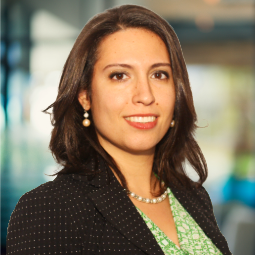
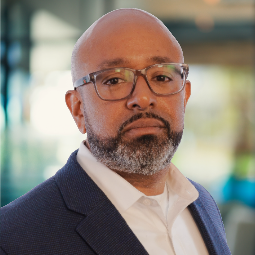
Authors: Tandis Nili & Haendel Conil
Global brokers have long been the default choice for multinational organizations. Their value proposition—centralized visibility, coordinated governance, and purchasing leverage—still matters. But heading into 2026, it is no longer enough for U.S. subsidiaries.
Global organizations with significant U.S. operations, relying exclusively on a standardized global program has become increasingly risky. The U.S. legal, regulatory, and claims environment behaves differently from any other jurisdiction—and those differences create structural failure points that global master policies are not designed to absorb.
Global executives expect certainty. U.S. exposures deliver volatility.
Bridging that gap requires a specialized U.S. broker working in partnership—not competition—with your global broker.
The Often-Missing Piece: Technical Gap Analysis and Defensibility
One of the most overlooked advantages of a specialized U.S. broker is their ability to perform deep technical coverage analysis against the global insurance program. While global programs prioritize consistency, U.S. exposures are born in local operations, jurisdictional nuance, and policy interpretation.
Specialized U.S. brokers routinely conduct side-by-side reviews of local U.S. policies and the global master. This goes beyond mere comparison; it is a search for structural failure points where Difference in Conditions (DIC) or Difference in Limits (DIL) protections may not respond as assumed under U.S. law – some of these pitfalls include:
- Erosion of Limits via Defense Costs: Many European master policies include defense costs within the limit of liability. A specialized U.S. broker identifies where a “Duty to Defend” (costs outside limits) is necessary to prevent legal fees from exhausting the funds available for indemnity.
- The “Non-Admitted” Cash Flow Gap: Inconsistencies in how loss is defined can lead to scenarios where a claim is payable to the European parent, but the U.S. subsidiary is left with an immediate, uninsured cash-flow crisis for local remediation.
- Jurisdictional Specificity: Specialized brokers identify uninsured exposures created by state-specific endorsements or statutes—such as New York’s “Action Over” or California’s wildfire regulations—that a generic global template often misses.
- Indemnity Grant Inconsistencies: Brokers pinpoint gaps between local and master indemnity grants, ensuring that definitions of “Occurrence” or “Property Damage” align with U.S. case law.
These findings are translated into clear coverage gap matrices that quantify exposure and recommend corrective action. This ensures that the global program provides actual certainty rather than just the appearance of it—preventing the most expensive surprises: claims that were expected to be covered but are not.
U.S. Loss Severity Is Now Structural
By late 2025, the data was unequivocal.
U.S. jury verdicts against corporate defendants reached historic levels. Nuclear verdicts — awards exceeding $10 million—rose more than 50% year over year, with aggregate verdict values surpassing $30 billion. Verdicts above $100 million continued to increase in frequency, including multiple billion-dollar outcomes.
At the same time, litigation funding, aggressive plaintiff marketing, jury anchoring tactics, and broader non-economic damages have fundamentally altered the loss landscape.
Nonetheless, the U.S. problem is not just nuclear verdicts —it’s structural friction.
Global executives often see U.S. litigation risk as an extreme outlier event. However, what materially impacts global owned subsidiaries is not the occasional nine figure verdict—it’s the relentless accumulation of frictional costs:
- High-cost U.S. defense counsel
- Frequency of attorney represented claims
- Social inflation embedded into annual cost trends
- Reserve escalation once plaintiff attorneys enter the picture
These dynamics drive U.S. Total Cost of Risk far more consistently than catastrophic verdicts.
Risk Control Has Become the Primary Value Driver
Insurers have responded accordingly. By 2025, carriers made it clear: they are no longer simply pricing risk—they are selecting it.
For U.S. subsidiaries, access to stable capacity, competitive terms, and coverage breadth increasingly depends on demonstrated risk control, not just historical loss experience.
Specialized U.S. brokers differentiate themselves by working upstream of claims, improving the company’s risk profile and establishing defensibility by reducing the conditions that drive catastrophic outcomes, including:
- Casualty controls focused on fleet safety, premises liability, contractor oversight, and life-safety practices;
- Property and business interruption mitigation centered on resilience, maintenance discipline, and operational interdependencies;
- Environmental and regulatory risk controls designed to reduce uninsured, recurring cash costs; and
- Ultimately, building documentation trail required to win in a U.S. court.
Insurers increasingly reward this work with better terms, broader coverage, and more consistent renewals—and penalize insureds who cannot evidence it.
Aggressive Claims Advocacy Still Shapes Outcomes
Even best-in-class risk control cannot eliminate loss entirely. And in the U.S., how losses are managed often matters as much as what occurred.
By 2025, most U.S. general liability and auto liability claims involved attorney representation within weeks of occurrence. Once that happens, reserves escalate quickly and positions harden.
Specialized U.S. brokers are built for early, forceful claims advocacy, including:
- Immediate severity triage and escalation
- Early engagement with carrier decision-makers
- Active reserve and exposure framing
- Strategic pursuit of early resolution to compress duration and volatility
This approach keeps claims from drifting into unnecessary severity due to delay or inertia.
A Modern Global Program Requires Two Pillars—Not One
Global brokers provide strategy, governance, and cohesion.
Specialized U.S. brokers, in partnership with the global brokers, ensure that strategy survives contact with U.S. litigation, regulation, and operational nuance.
For global executives responsible for certainty, predictability, and cost discipline, the question is no longer:
“Why would we add a U.S. broker?”
The real question is:
“Why would we face the U.S. market without one?”